AI-generated media & deepfake detection
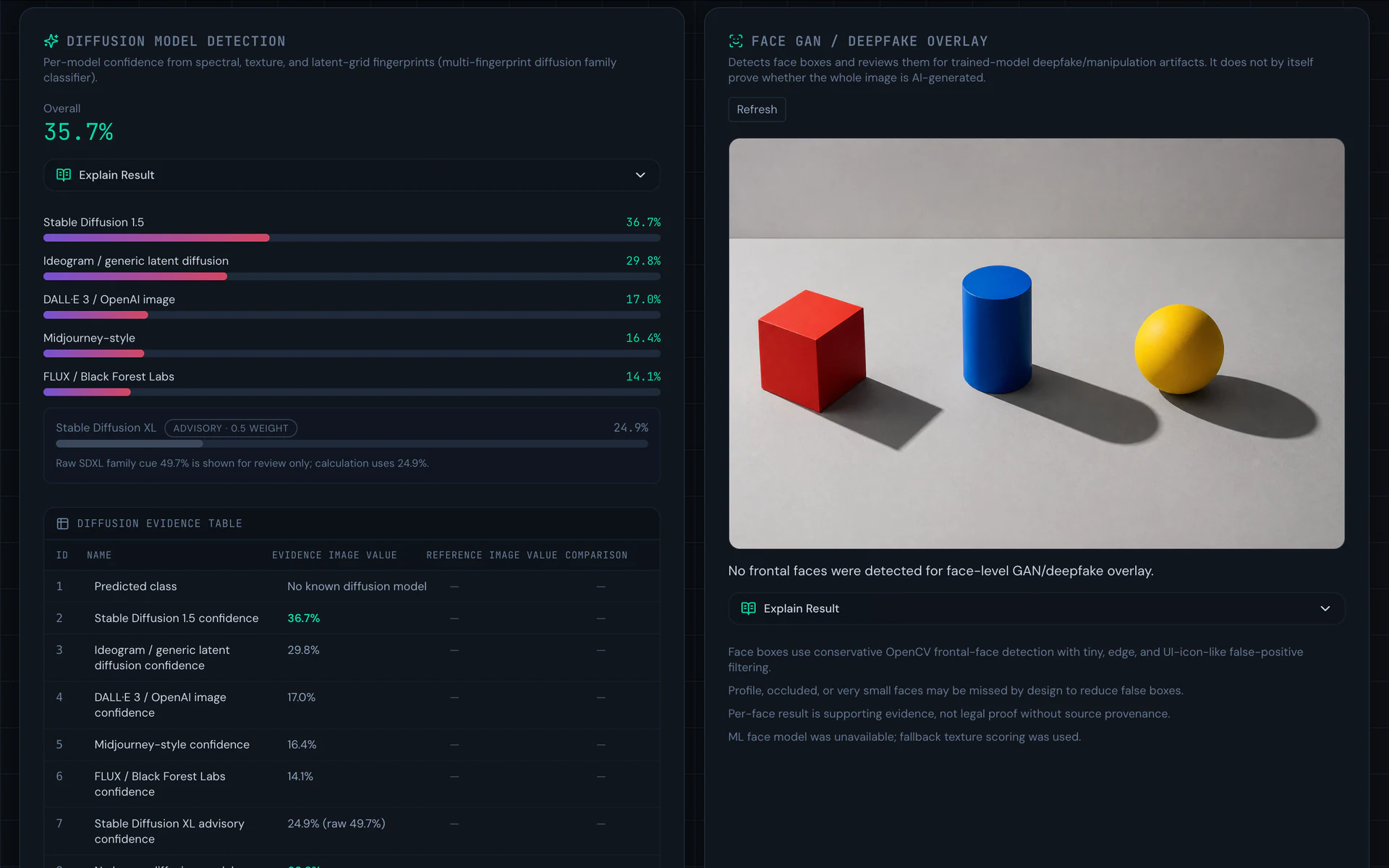
Assess synthetic-image indicators and video deepfake cues using model- and artefact-based signals.
Correlate the signals. Document the decision.
An evidence-oriented platform combining AI-media detection, manipulation forensics, provenance checks and analyst workflows. TattvAI correlates independent signals to support triage, review and documented investigative decisions.
TattvAI brings model, pixel, sensor, compression, provenance and temporal signals together for explainable analyst review.
Assess synthetic-image indicators and video deepfake cues using model- and artefact-based signals.
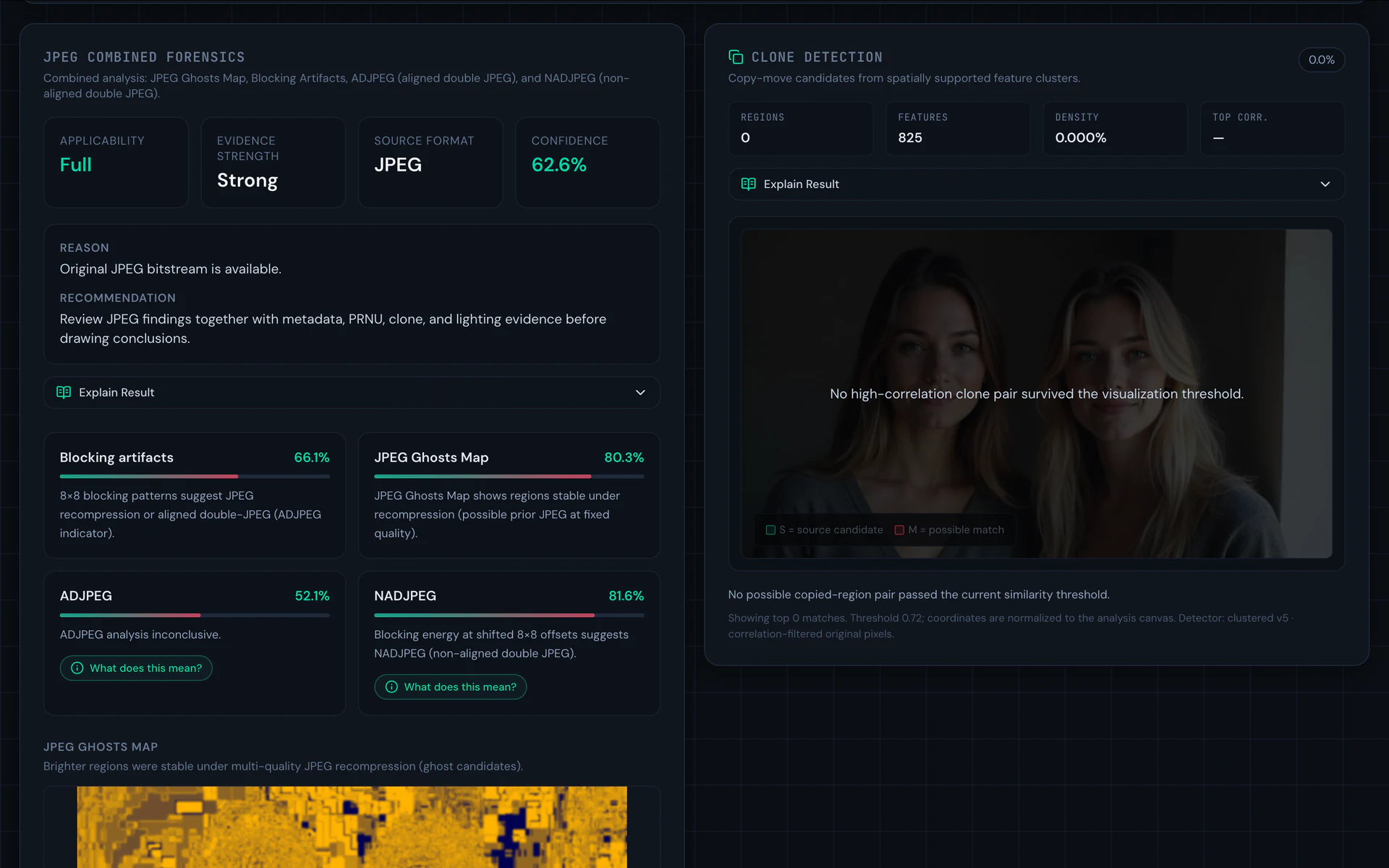
Surface copy-move regions, local inconsistencies and sensor-noise cues for tampering triage.
Examine quantisation, double compression, ghosting, blocking and recompression anomalies.
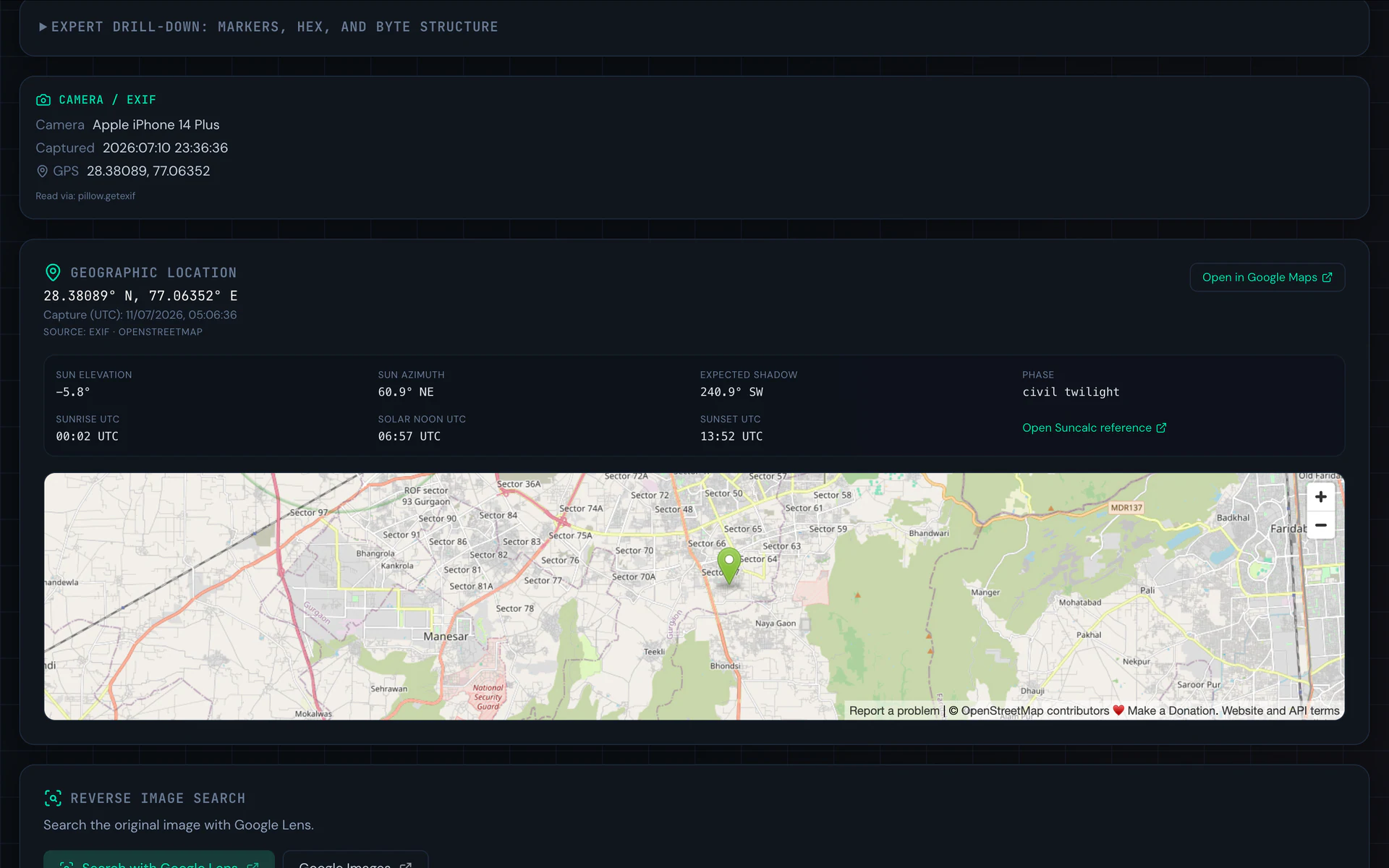
Review EXIF, timestamps, device data, GPS context and provenance consistency.
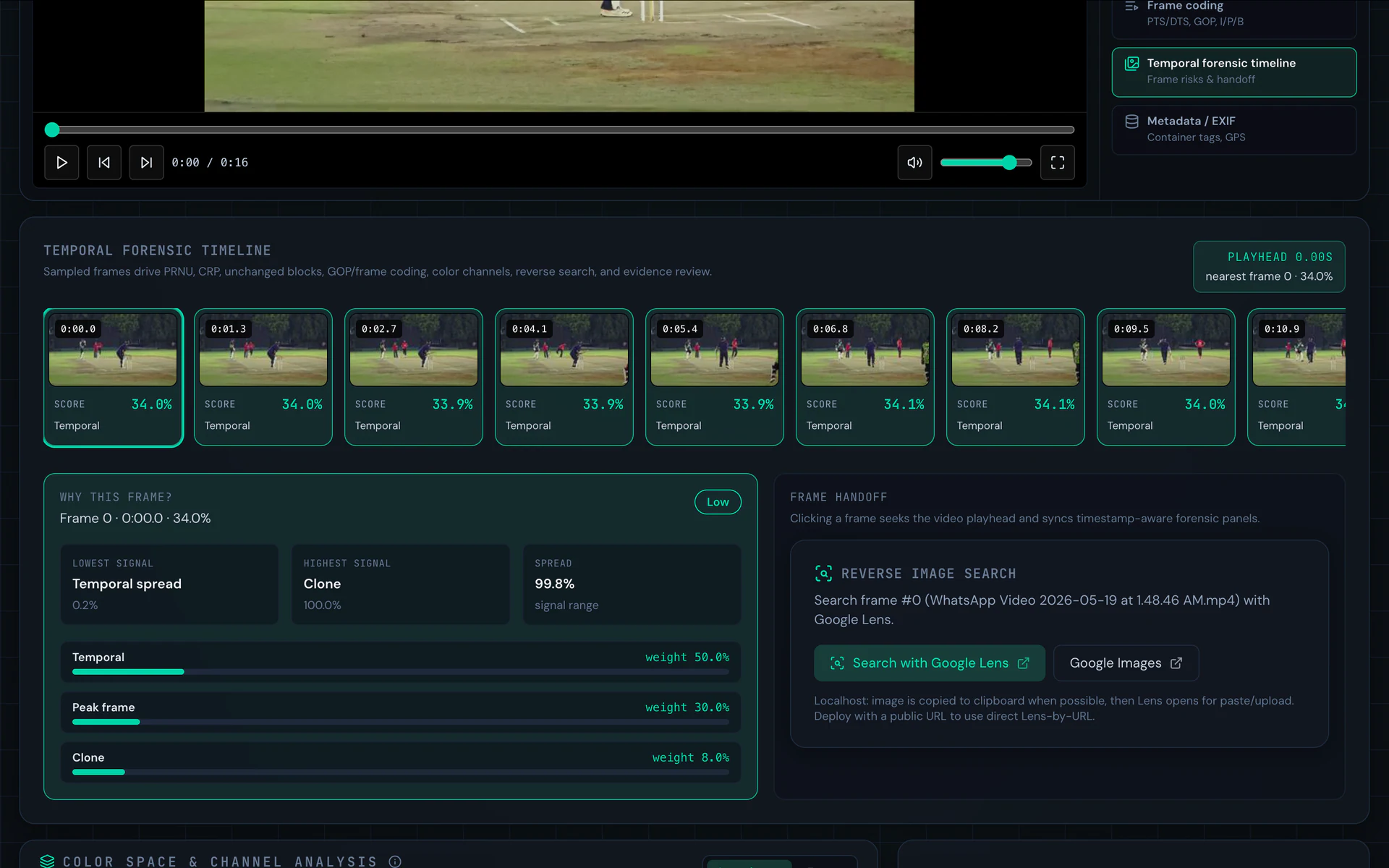
Navigate timelines, inspect key frames and assess anomalies at individual-frame level.
Mark regions of interest, add notes and bookmarks, compare evidence and lead a structured review.
Organise cases, bulk processing, saved analyses, audit history and repeatable workflows.
Combine, tune and compare forensic filters for the media type and case context.
Produce structured findings while binding every specimen to a SHA-256 cryptographic hash.
Move from triage to report with explainable signals, stated limitations and analyst sign-off.
Each investigation combines six signal families: AI/deepfake, pixel, sensor/PRNU, compression, provenance and temporal continuity.
Register the image or video and bind the specimen to a SHA-256 identity.
Run selected model, pixel, sensor, compression, provenance and temporal checks.
Compare independent indicators instead of relying on a single score.
Interpret findings against case context, source evidence and known limitations.
Document the analysis, reasoning, limitations and analyst sign-off.
TattvAI supports evidence-led review across public, media, commercial and legal contexts.
Assess questioned media through a structured, multi-signal forensic workflow.
Review provenance, manipulation and synthetic-media indicators before publication or reliance.
Investigate submitted images and videos with repeatable analysis and specimen identity controls.
Examine user-generated and brand-related media for manipulation and AI-generation signals.
Give legal, compliance and security teams documented findings backed by analyst review.
Move from the investigation canvas into model, pixel, provenance and temporal views without losing specimen identity or review history.

TattvAI keeps findings explainable, source-bound and subject to trained human interpretation.
TattvAI provides multi-signal decision support, not a standalone determination of authenticity. A trained analyst should interpret findings against case context and source evidence, state limitations, and document applicable legal, privacy and chain-of-custody controls.
Bring us your investigation workflow, media types and reporting expectations. We’ll show how TattvAI can fit the review process.